Other Tomorrows
Museum of Modern Art | Warsaw | 2025–2026
The genie falls into his own trap and locks himself in the lamp. A woman in a dark forest grows sharp bear-like claws. A young boy puffs on a hookah and immerses himself in the world of video games, where he continues a lost relationship with a loved one. At the bottom of Lake Świteź, women-plants plot revenge on their oppressors. The human body, like that of a butterfly, transforms into a peculiar hybrid. The spirits of ancestors return to earth in the form of cyborgs in order to heal. Baba Yaga, Melusina, and other heroines of Slavic legends dance in a looping circle of time marked by the full moon. These complex and colorful characters – though seemingly detached from political and social reality – constitute attempts to articulate a new language to talk about one's own position and complex subjectivity. They defy simple categorization and signal a growing need to move beyond familiar patterns of thinking about identity, physicality, and relationships with the world. They have settled in the 'in between' spaces and remain filed away in 'other' folders.
The Other Tomorrows exhibition raises questions about identity, community, and relationships with the non-human at a time when existing categories are no longer sufficient and systemic crises expose the violence inherent in seemingly neutral structures of knowledge. In the context of the major feminist exhibition City of Women at the Museum of Modern Art in Warsaw, the question arises: 'What comes after feminism?' In an era of crises of identity politics and growing social polarization, feminism can no longer be treated solely as a struggle for women's rights in the traditionally defined sense. What comes after feminism does not reject it but develops it, transforming it into a movement that reflects not only on gender, but also on the multiplicity of forms of life, corporeality, and relationships. The starting point for the exhibition is the need to transcend simplistic divisions: man–woman, nature–culture, human–animal, rationality–intuition, civilization–savagery. These dichotomies, deeply rooted in the legacy of colonialism and the Enlightenment, purport to rationally organize reality through selection, classification, and control. The exhibition presents the work of seven international artists who, rather than fighting for a place within the existing order, create alternative tools and strategies for being in the world.
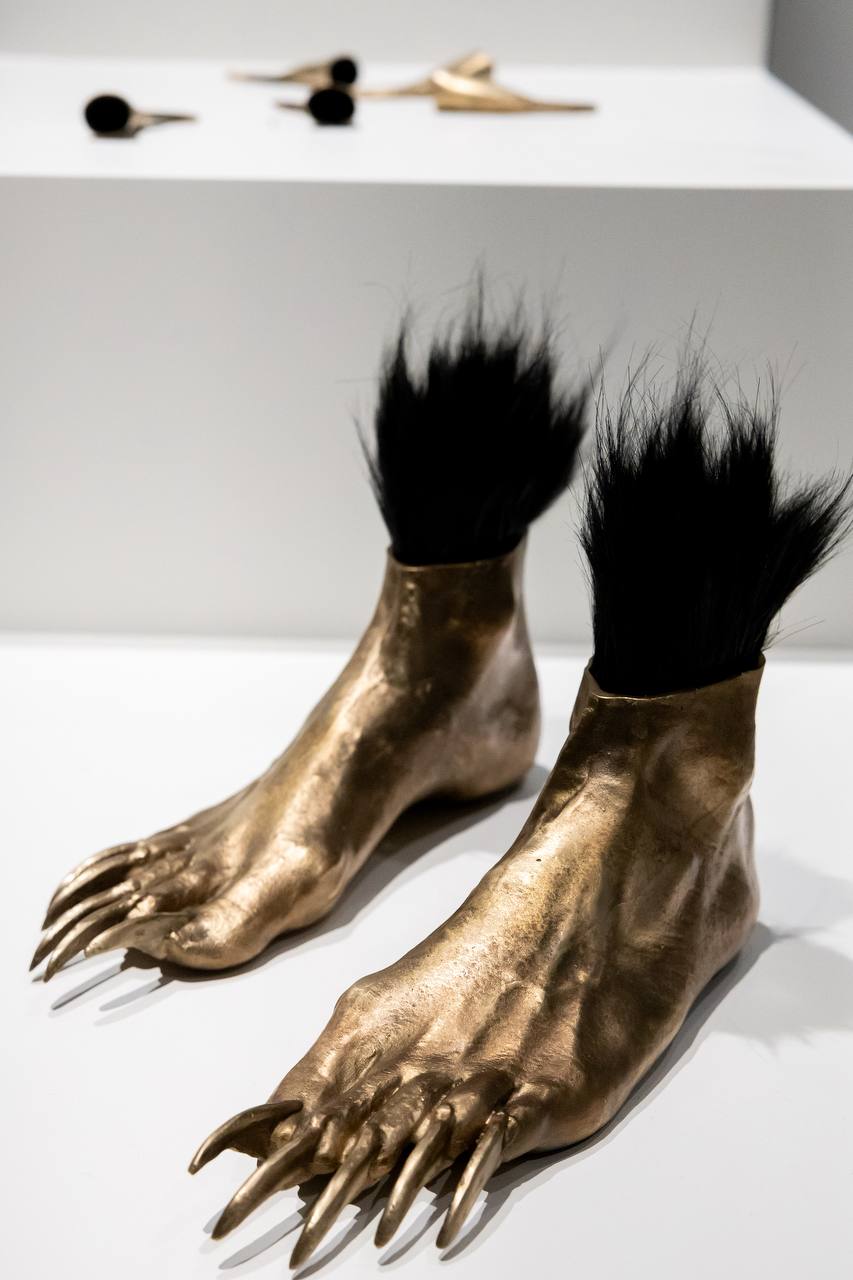
The bodies on display in the exhibition refuse subordination to normative classifications – anatomical, social, and cultural. Here, artistic practice undermines not only visual representations of corporeality, but also the very foundations of Western thinking about what is 'healthy,' 'normal,' and 'human.' In Robert Gabris's works, anatomy ceases to be an unquestionable dogma and becomes a performance, a process of transformation that remains open to its relationship with the environment. This understanding of corporeality takes into account the perspective of non-human beings – animals and plants – and seeks to protect them from the violence of classification and hierarchies that attempt to subjugate them. Animalization and savagery in Katarzyna Depty-Garapich's works become a strategy for escaping the oppression of the human species, which is in the process of destroying itself. The memory of ancestors hiding in bear dens, communicating with spirits, and the performance of rituals constitute gestures of reclaiming subjectivity.
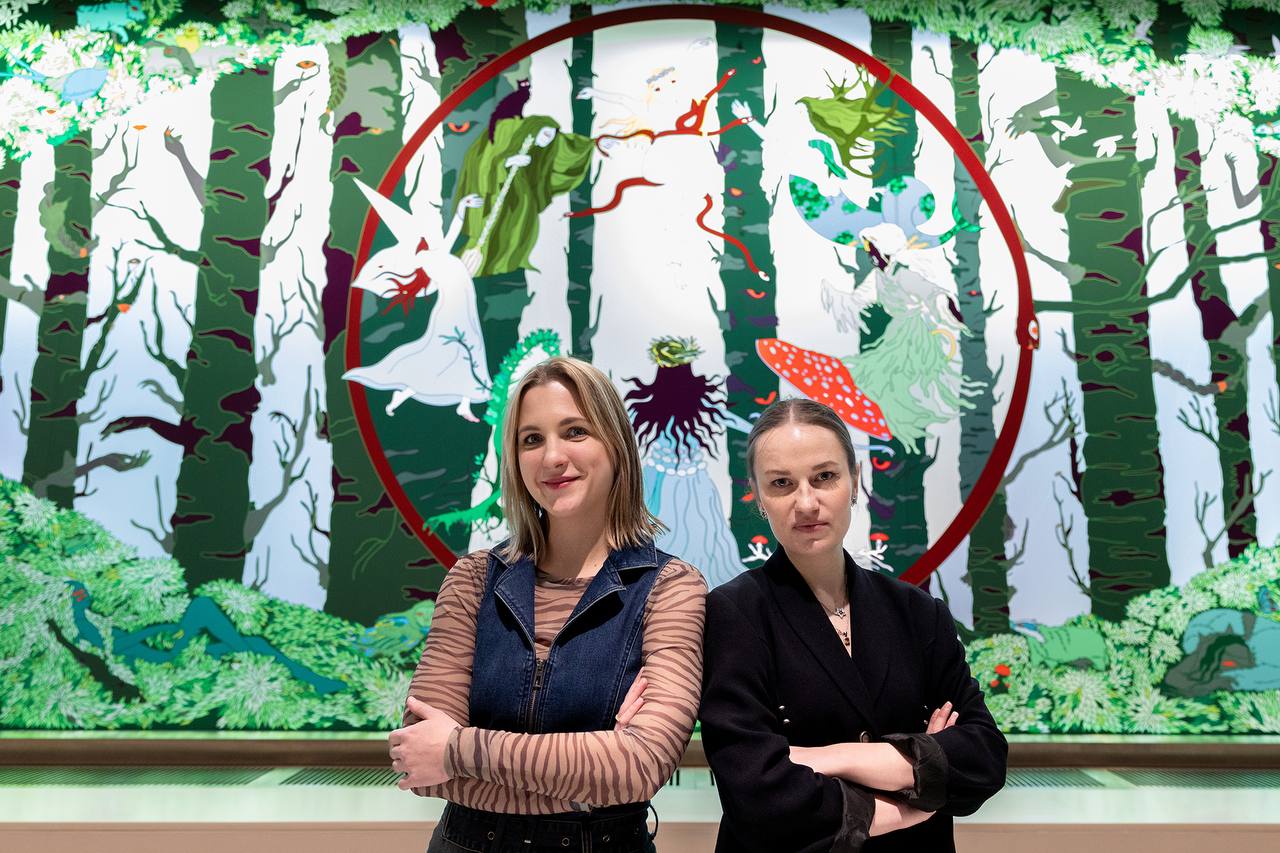
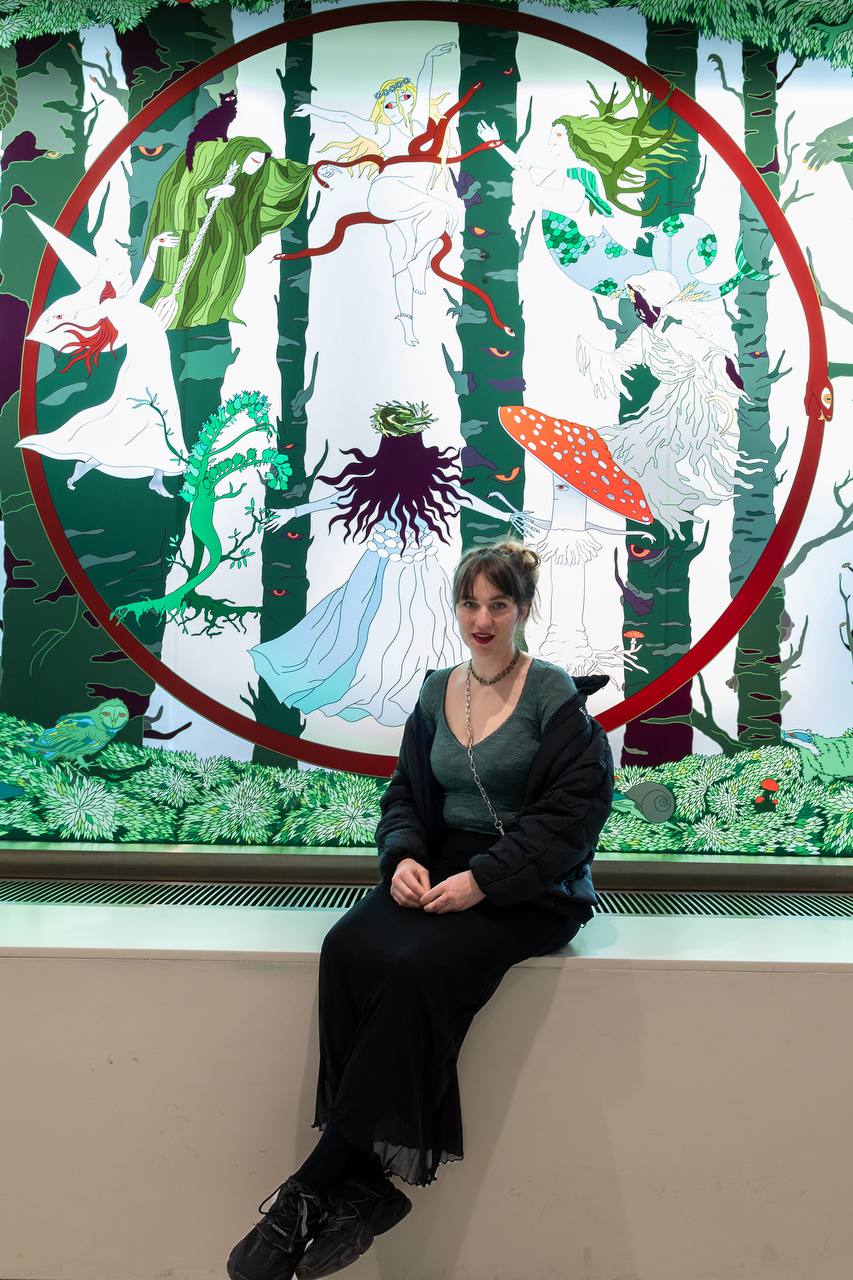
In the stories presented at the exhibition, traumatic pasts are transformed into strength. The 'evil' figures from myths and legends in the works of Liliana Zeic and Marie Lukáčová take over the narrative and transform it into a tool of emancipation. Imagination makes it possible to challenge dominant systems of knowledge that reject everything which does not fit into the categories of reason. Fantasy becomes a space not only of escapism, but also of survival and self-determination.
Similarly, in the works of Sara Sadik, escape into the world of video games can be an act of emotional healing, and childhood imagination a defense against systemic exclusion and stereotyping. Here, fiction, dreams, and ritual do not belong to the realm of the 'unreal'. On the contrary, they prove to be the only possible space of freedom in a world that rejects equality and subjectivity. Care is understood here not so much in therapeutic terms as in political and epistemological ones: as embodied knowledge extended beyond the language of institutions. Transformation is also possible in relation to technology, understood not as external to the human being, but as an element of the same relational network.
The exhibition brings together speculative artistic narratives that open up a space for imagining oneself and the world beyond binary thinking, essentialism, and politics of exclusion. Although the word 'tomorrow' appears in the exhibition's title, the vector of thinking is not directed towards a future understood as development, progress, or modernization. Instead, it points toward alternative, non-linear temporalities, much like in Natasha Tontey's work, where past and future intertwine within a transforming present. The artists presented in the exhibition draw on their own cultures, local legends, and narratives, reinterpreting them from feminist, decolonial, and queer perspectives in search of alternative models of emancipation in the face of contemporary oppressive systems. Other Tomorrows is an attempt to activate imagination as a political practice based on circulation, non-conformity, and refusal. Feminism does not disappear, but undergoes a transformation. The question is not 'What succeeds it?', but rather 'What else does it allow us to imagine?'
Curators: Michalina Sablik, Vera Zalutskaya
Artists: Katarzyna Depta-Garapich, Robert Gabris, Marie Lukáčová, Tala Madani, Sara Sadik, Natasha Tontey, Liliana Zeic
Coordinator: Jagna Lewandowska
Producer: Aleksandra Fudalej